
Abnormal Smears & Colposcopy · Chelsea, London
Abnormal Smear or Dyskaryosis?
See a Consultant
This Week
Had a letter saying HPV was found, or that you have borderline, low grade or high grade dyskaryosis? See a consultant gynaecologist this week, with colposcopy at the same visit where it’s needed and your result explained face to face.
- Be seen quickly – urgent appointments available
- Colposcopy carried out by a consultant gynaecologist
- Biopsy taken at the same appointment if needed
- Most abnormal results are not cancer, and we will explain why
- Self pay and all major insurers welcome
★★★★★
4.9/5 on  Google &

Trusted by women across London
Google & Trusted by women across London
Self Pay & Insurance Welcome






Understanding Your Result
What an Abnormal Smear Result Actually Means
An abnormal smear result means the sample taken from your cervix showed something that needs a closer look. In the large majority of cases it is not cancer. It usually means high-risk HPV has been found, or that early changes have been seen in the cells of your cervix. Around 1 in 20 screening samples in England show some kind of abnormality and the large majority of those are low grade or borderline.
Cervical screening in the UK now tests for high-risk HPV first. HPV is a very common virus that most people come into contact with at some point, and in most cases the body clears it on its own. Where cell changes are found, they are pre-cancerous rather than cancerous, and treating them early is what prevents problems later. That is the whole purpose of screening, and it works.
You May Be Here Because
If any of the following apply, a consultant appointment will give you answers quickly:
- Your smear result letter says HPV was found
- You have been told there are borderline or low-grade cell changes
- You have been told there are high-grade cell changes, or CIN2 or CIN3
- You have been referred for colposcopy and do not want to wait
- You have had bleeding between periods, after sex or after the menopause
- Your smear was reported as inadequate and needs repeating
- You are overdue for screening and would like it done privately

★★★★★
“The staff at the Ovara clinic made me feel incredibly cared for. The environment was calming and I was never waiting to be seen. I would not hesitate to recommend them for women’s wellness.”
Verified Doctify review, June 2026
Your Result Explained
The Three Results That Bring Women Here
What your letter says determines what happens next. Your consultant will go through your result in full, in plain language, at your first appointment.
HPV found, no cell changes
HPV Positive Only
High-risk HPV was found but your cells look normal. The standard NHS pathway is a repeat smear in 12 months, which many women find a long time to wait without answers.
- Most HPV infections clear naturally within two years
- Not an infection you need to feel any shame about
- Private review and earlier repeat testing available
Borderline or mild changes, CIN1
Low-Grade Dyskaryosis
Sometimes reported as borderline changes, mild dyskaryosis or CIN1. These are early cell changes that very often return to normal on their own without any treatment at all.
- Colposcopy to confirm the extent of the changes
- Watchful monitoring is often the right answer
- Treatment only if the changes persist or progress
Moderate or severe changes, CIN2 and CIN3
High-Grade Dyskaryosis
Reported as moderate or severe dyskaryosis, or CIN2 and CIN3. These are pre-cancerous changes, not cancer, and treating them is highly effective at preventing cervical cancer.
- Colposcopy and biopsy to confirm the grade
- LLETZ treatment under local anaesthetic
- Test of cure smear six months afterwards
Your Result Explained
What Does Dyskaryosis Mean on a Smear Result?
Dyskaryosis is the word UK laboratories use for cells from the cervix that don’t look normal under the microscope - it means the cells have changed, not that you have cancer. The changes are graded as borderline, low grade or high grade depending on how different the cells look and your letter will usually say which. Most dyskaryosis is caused by high risk HPV and in many women, particularly at the lower grades, the changes go back to normal on their own.
Low grade dyskaryosis
Low grade dyskaryosis, sometimes written as mild dyskaryosis or CIN1 after a biopsy, means mild changes in the cells on the surface of the cervix. It isn’t cancer and it isn’t usually treated straight away - many of these changes clear without any treatment, often within 2 years. In the NHS you’ll be invited for colposcopy if HPV was also found, so a consultant can look at the cervix and confirm the extent of the changes. If the changes are confirmed as low grade the usual plan is a repeat smear and HPV test in 12 months rather than treatment.
High grade dyskaryosis
High grade dyskaryosis covers moderate and severe changes, which become CIN2 and CIN3 once a biopsy has graded them. These are pre-cancerous cells, not cancer, however they’re less likely to clear on their own so they’re usually treated. The treatment is normally LLETZ, a 15 minute procedure under local anaesthetic that removes the affected area of the cervix and clears the abnormal cells for most women in a single treatment. A test of cure smear around 6 months later confirms the cells and the HPV have gone.
Borderline changes
Borderline changes sit between normal and low grade - the cells look slightly different but not enough to call them dyskaryosis. On its own a borderline result with no HPV goes back to routine screening. Borderline changes with high risk HPV are referred for colposcopy in the same way as low grade dyskaryosis, mostly to make sure nothing more significant has been missed.
Dyskaryosis and CIN are not the same thing
Dyskaryosis describes what the smear sample shows and CIN (cervical intraepithelial neoplasia) describes what a biopsy shows, graded 1-3. A smear can only suggest the grade whereas a biopsy confirms it, which is why colposcopy and biopsy come before any decision about treatment. It’s common for a high grade smear to come back as CIN1 on biopsy and occasionally for a low grade smear to show CIN2, so the biopsy result is the one your treatment plan is based on.
Assessment & Treatment
Everything You Need, Under One Roof
Not every abnormal result needs treatment. When it does, your consultant will talk you through what is involved before anything goes ahead.
01
Diagnostic, 15 to 20 minutes
Colposcopy
A close examination of the cervix using a magnifying instrument that stays outside the body. It is similar to having a smear taken and tells your consultant exactly where any changes are and how extensive they are.
02
Same visit as colposcopy
Cervical Biopsy
A small tissue sample taken during colposcopy and sent for laboratory analysis. This confirms the grade of any cell changes so your treatment decision is based on fact, not estimate.
03
Day case, local anaesthetic
LLETZ
Large loop excision of the transformation zone removes the affected area of the cervix using a fine heated wire. It takes around 15 minutes, you go home the same day, and it clears the abnormal cells in the great majority of cases.
04
Where more tissue is needed
Cone Biopsy
Removes a cone-shaped section of the cervix where changes extend further up the cervical canal, or where a larger sample is needed to be certain of the diagnosis.
05
Selected low-grade cases
Ablative Treatment
Cold coagulation or cryotherapy destroys a small area of abnormal cells rather than removing it. Suitable for certain low-grade changes where the whole affected area is clearly visible.
06
After treatment
Test of Cure & Follow-Up
A follow-up smear around six months after treatment confirms the HPV and cell changes have cleared. Most women are then able to return to routine screening intervals.
Your Visit
From Worried Letter to Clear Answers
Most patients go from first enquiry to a confirmed picture of what is happening and a plan they understand within a single visit.
1
Book Your Appointment
Call, email or complete the form below. Most patients are offered an appointment within 48 hours. No GP letter required.
2
Your Consultation
Bring your result letter. Your consultant will go through exactly what it says, what it means, and answer every question you have.
3
Colposcopy If Needed
Where colposcopy is clinically appropriate it can usually be carried out at the same visit, with a biopsy taken if your consultant recommends one.
4
Your Results and Plan
Biopsy results come back within around one to two weeks and are explained by the same consultant, along with what happens next.
GMC Registered Consultants
CQC Regulated Clinic
All Major Insurers Accepted
274 Fulham Road, Chelsea
Consultant-Led Scanning
Transparent Pricing
Clear Prices, No Hidden Costs
All prices are per appointment. Your final fee will depend on your clinical needs. All major health insurers are welcomed.
Initial Consultation
A full one-to-one review of your smear result and history with a consultant gynaecologist, including an examination.
- With a GMC-registered consultant
- Your result letter explained in full
- Clinical examination included
- Written care plan and next steps
£300
Colposcopy
A detailed consultant examination of the cervix, with a biopsy taken at the same visit where one is needed.
- Carried out by a consultant gynaecologist
- Includes biopsy, polypectomy or vulvoscopy
- Findings explained straight after
- Written care plan and next steps
£856
Follow-Up Appointment
To go through your biopsy results, plan treatment or check in after a procedure with your named consultant.
- With the same consultant throughout
- Results review and treatment planning
- Post-treatment check and monitoring
- Referral letters and onward care
£260
Your Specialists
Meet Your Cervical Health Team
Every appointment is with a named consultant gynaecologist. You will see the same specialist from your first visit through to your results and any treatment.

Mr Amer Raza
Founder & Consultant Gynaecologist
Accredited specialist in minimally invasive gynaecological surgery, with extensive experience in hysteroscopic and cervical procedures. GMC: 5205372
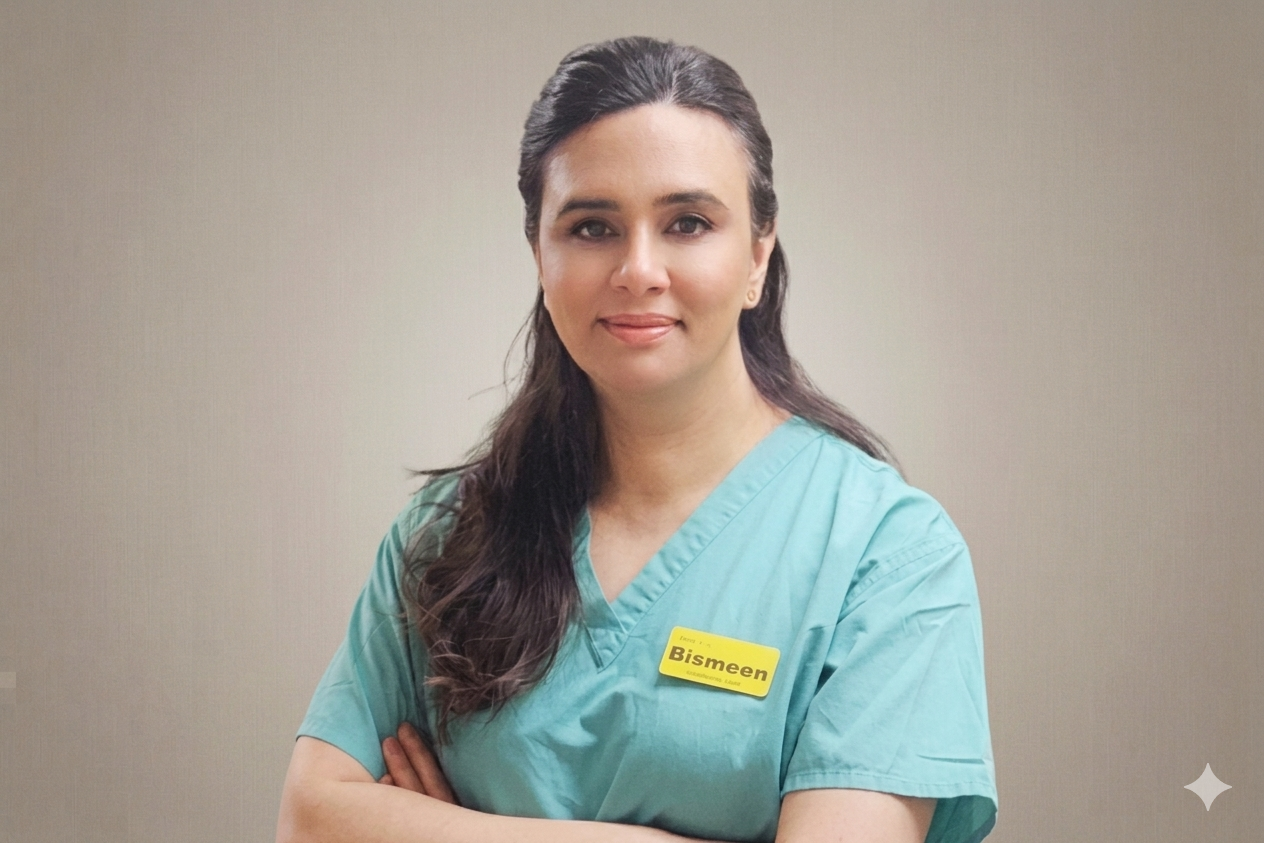
Dr Bismeen Jadoon
Consultant Obstetrician & Gynaecologist
Experienced consultant in obstetrics and gynaecology, providing smear testing, HPV review and expert assessment of abnormal cervical screening results.

Dr Dina El-Hamamsy
Consultant Gynaecologist, Specialist in Urogynaecology
Consultant gynaecologist caring for women through cervical screening, abnormal smear follow-up and the wider gynaecological picture behind their symptoms.

Dr Sarah Wali
Consultant Obstetrician & Gynaecologist
Experienced in obstetrics and gynaecology, providing high-quality care across smear testing, HPV review and cervical health.

Dr Beth Cartwright
Consultant Obstetrician & Gynaecologist
Specialist in obstetrics and gynaecology, supporting women through abnormal smear results with clear, reassuring explanation at every step.

Dr Helen Staley
Consultant Gynaecologist, Colposcopy Lead
Colposcopy lead at Chelsea and Westminster Hospital, with specialist expertise in the assessment and treatment of abnormal smears and cervical cell changes. GMC: 06148987
Why Ovara Health
A Different Kind of Colposcopy Clinic
a
Consultants Only
Your colposcopy is carried out by a fully qualified consultant gynaecologist. Never a registrar, never a junior doctor.
a
No Waiting to Find Out
Waiting weeks for a colposcopy appointment is the hardest part for most women. Most patients here are seen within two working days.
a
Everything Under One Roof
Consultation, colposcopy, biopsy and treatment all take place at our Fulham Road clinic. No referrals to different locations.
a
The Same Consultant Throughout
Your named consultant sees you from first appointment through to your results, treatment and test of cure. Continuity as standard.
FAQs
Frequently Asked Questions
Does an abnormal smear result mean I have cancer?
Almost always, no. An abnormal result usually means high-risk HPV has been found, or that early changes have been seen in the cells of your cervix. These changes are pre-cancerous rather than cancerous, and many resolve on their own without treatment. Screening exists specifically to find and treat these changes long before they could ever become a problem. Your consultant will go through your individual result and explain exactly what it does and does not mean.
What does testing positive for HPV mean?
HPV, or human papillomavirus, is a very common virus that most sexually active adults will come into contact with at some point in their lives. Testing positive for high-risk HPV does not mean you have done anything wrong, and it does not mean you will develop cervical cancer. In most cases the immune system clears the virus on its own within around two years. Where it persists, it can cause changes to the cells of the cervix, which is why follow-up matters.
What actually happens at a colposcopy?
A colposcopy is very similar to having a smear taken. You lie on a couch, a speculum is gently inserted, and your consultant uses a colposcope, a magnifying instrument that stays outside your body, to look closely at your cervix. A liquid is applied that makes any abnormal areas easier to see. The whole appointment usually takes 15 to 20 minutes. If a small tissue sample is needed, it is taken at the same time.
Does a colposcopy hurt?
Most women describe a colposcopy as uncomfortable rather than painful, much like a smear test. If a biopsy is taken you may feel a brief pinch or a period-like cramp. Some light spotting or a dark discharge afterwards is normal and settles within a few days. Taking a simple painkiller beforehand can help. Tell your consultant if you feel anxious about the examination, as it makes a real difference to how the appointment is handled.
What is LLETZ treatment?
LLETZ stands for large loop excision of the transformation zone. It removes the area of the cervix containing the abnormal cells using a fine heated wire loop, under local anaesthetic. It takes around 15 minutes, you go home the same day, and it successfully clears the abnormal cells in the great majority of women. The removed tissue is also sent to the laboratory, which confirms the diagnosis at the same time as treating it.
Will treatment affect my fertility or a future pregnancy?
A single LLETZ treatment does not affect your ability to conceive. Where a larger or deeper area of the cervix is removed, or where you have had more than one treatment, there can be a slightly increased chance of a baby arriving early in a future pregnancy. Your consultant will factor your plans for pregnancy into the treatment recommendation and will talk this through with you before anything goes ahead.
How long do biopsy results take?
Biopsy results usually come back within around one to two weeks. Your consultant will contact you to go through them and explain what they mean and what happens next. You see the same consultant throughout, so you are never repeating your story to someone new.
How quickly can I be seen?
Most patients are offered an appointment within 48 hours of getting in touch. No GP referral is needed. You can book directly by phone, email or by completing the form below. Bring your screening result letter with you if you have it.
Do I need a GP referral?
No. You can book directly as a self-pay patient without a GP letter or referral. If your insurer requires a referral for pre-authorisation purposes, our team can help you arrange that.
Which health insurers do you accept?
We work with all major UK private health insurers including Bupa, Aviva, Vitality, WPA and Cigna. Please bring your membership details and any pre-authorisation number when you attend.
What is the difference between low grade and high grade dyskaryosis?
Low grade means mild changes in the surface cells that often return to normal without treatment, whereas high grade means moderate or severe changes that are less likely to clear on their own and are usually treated. Neither is cancer. Both are checked with colposcopy and the biopsy taken at that visit is what decides whether treatment is needed.
Does dyskaryosis cause symptoms?
Not usually. Dyskaryosis is found by screening precisely because the changes don’t cause symptoms, which is why keeping up with smear tests matters. Bleeding between periods, after sex or after the menopause and pelvic pain are not symptoms of dyskaryosis however, they should always be looked into in their own right and we can see you for both at the same appointment.
What are the chances of high grade dyskaryosis being cancer?
Low. High grade dyskaryosis is a pre-cancerous change and in the great majority of cases the biopsy confirms CIN2 or CIN3, not cancer. A small number of women with a high grade result are found to have early cervical cancer at colposcopy, which is exactly why these results are seen quickly and why treating CIN matters - it removes the changes before they have the chance to develop further.
Can low grade dyskaryosis turn out to be cancer?
Very rarely. A smear suggests a grade but it’s the biopsy that confirms it and now and then a low grade smear shows a higher grade on biopsy. That’s the reason a colposcopy is offered even for low grade changes when HPV is present - it rules out anything more significant so you and your consultant can agree on watchful monitoring with confidence.
I have low grade dyskaryosis and I'm HPV positive. What happens now?
In England this combination is referred for colposcopy. Your consultant examines the cervix and takes a biopsy if anything looks more than low grade. If low grade is confirmed the usual plan is no treatment and a repeat smear with HPV test in 12 months, because most of these changes clear on their own once the body deals with the virus. We can do that repeat test privately if you’d rather not wait for the NHS recall.
How long does it take for dyskaryosis to become cancer?
Usually many years, if at all. Most dyskaryosis never progresses and where it does, the move from high grade changes to cancer is typically slow, which is why screening every 3-5 years works. It is not something that changes in the weeks between your letter and your appointment, so there is time to be seen properly without rushing a decision.
Can I have colposcopy or treatment for dyskaryosis while pregnant?
Colposcopy is routinely carried out in pregnancy and is considered safe, so it is often used to check high grade changes so a plan can be made. Treatment is normally postponed until after the birth unless there is a concern about cancer, because LLETZ in pregnancy carries a higher risk of bleeding. If you’re pregnant and have had an abnormal result, tell us when you book so the right consultant sees you.
Is dyskaryosis the same as dysplasia?
Yes, in practice. Dysplasia is the older term and the one still used in the US whereas dyskaryosis is the term UK laboratories use for cell changes seen on a smear. Both describe abnormal but non-cancerous cells and both are graded from mild to severe.
Find Us
Our Chelsea Clinic
Address
274 Fulham Road, Chelsea, London SW10 9EW
Phone
Opening Hours
Monday to Friday: 8am to 6.30pm
Saturday: 9am to 5pm
Sunday: Closed
Getting Here
Nearest tubes: Fulham Broadway (District) and South Kensington (District, Circle, Piccadilly). Street parking and buses available.

Book Your Appointment
Ready When You Are
Call us now, or leave your details and our reception team will call you back the same working day to confirm a time.
-
Call us020 7751 4488
Mon to Fri 8am to 6.30pm, Sat 9am to 5pm -
Email usreception@ovarahealth.co.uk
-
Visit us274 Fulham Road, Chelsea, London SW10 9EW
-
Insurance welcomeBupa, AXA, Aviva, Vitality, WPA, Cigna