
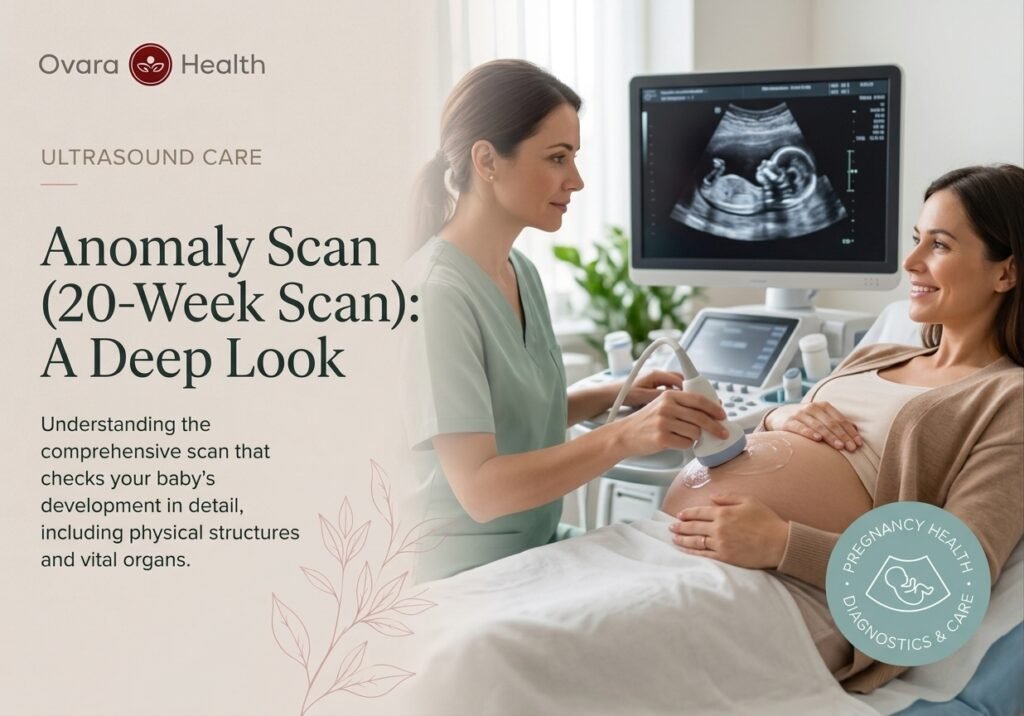
What Is an Anomaly Scan? Your 20-Week Pregnancy Scan Explained

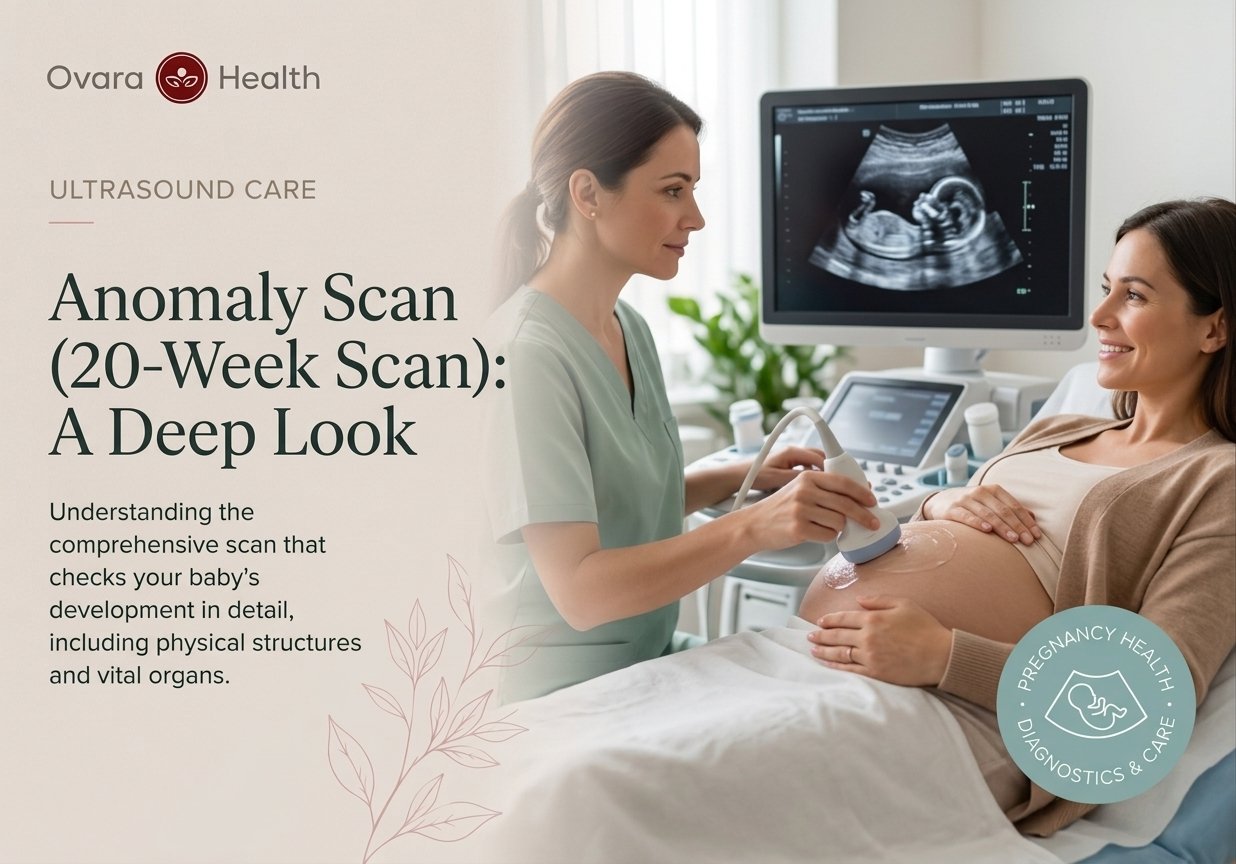
Key Facts: An anomaly scan (the 20-week scan) is a detailed ultrasound carried out between 18-22 weeks to check your baby’s growth and organ development – it’s offered routinely on the NHS and is also available privately. It examines the head, spine, heart, abdomen, kidneys and limbs and confirms placenta position and fluid levels. Most scans show everything developing normally.
An anomaly scan is a detailed ultrasound carried out during pregnancy to check your baby’s development – it’s also known as the mid-pregnancy scan or the 20-week scan, and it gives the sonographer a thorough look at how your baby is growing and whether the major organs are forming as expected.
For most women, this scan brings real reassurance. For some, it raises questions that need careful follow-up, and either way it’s one of the most important appointments in your pregnancy.
Quick Answer: The anomaly scan is done between 18 and 22 weeks and takes 30-45 minutes. It checks your baby’s major organs, measurements and placenta position, and most results are reassuring. A private anomaly scan gives you a longer appointment, a specialist sonographer and the chance to bring a partner or family member along.
When is the anomaly scan done?
The anomaly scan is typically carried out between 18 and 22 weeks of pregnancy – it’s the detailed follow-up to the 12-week scan, which focuses on dating your pregnancy and first trimester screening. The NHS recommends 20 weeks as the standard timing and most private clinics follow the same guidance.
At this stage your baby is developed enough for the sonographer to get a clear view of all the structures they need to assess. Before 18 weeks some organs may not yet be fully visible, however after 22 weeks your baby’s size can make certain checks more difficult.
If your baby’s position limits visibility during the scan, you may be invited back for a repeat scan to make sure nothing is missed.
What does the anomaly scan check?
The sonographer will systematically examine your baby’s anatomy, including:
The scan also records your baby’s measurements to check they’re growing in line with their gestational age.
Can the anomaly scan tell the baby’s sex?
The primary purpose of the scan is medical, however if your baby is in a good position and you’d like to know, the sonographer may be able to tell you the sex. This isn’t always guaranteed though, as it depends on how your baby is lying at the time of the scan.
What happens if something is found?
The majority of anomaly scans show that everything is developing normally, however in some cases the sonographer may identify something that needs further investigation.
This doesn’t always mean there’s a serious problem – sometimes a finding simply needs closer monitoring on a later scan. If a concern is identified, your consultant will explain the findings clearly and calmly and talk through what the next steps look like.
At Ovara Health our consultants are experienced in supporting women through every outcome, and you will never be left without a clear plan or someone to speak to.
“Most parents come into the anomaly scan more anxious than they need to be. In my experience the large majority of scans are completely reassuring – and where we do find something, having an experienced consultant explain it straight away, in the same appointment, makes a real difference to how that news lands.”
Mr Amer Raza, MBBS MRCOG, Consultant Gynaecologist
Why choose a private anomaly scan?
Many women choose a private anomaly scan for a number of reasons:
At Ovara Health in Chelsea, our sonographers provide detailed, expert-led anomaly scans in a calm and comfortable environment. You’ll receive your results during the appointment itself and have the chance to ask any questions.
NHS vs private anomaly scan: what’s the difference?
Frequently asked questions
Do I need a full bladder for the anomaly scan?
At 20 weeks a full bladder generally isn’t required – your baby is large enough to scan clearly without one. It’s always worth checking with your clinic beforehand though, as guidance can vary slightly.
How long does the anomaly scan take?
Most anomaly scans last between 30 and 45 minutes, though this can vary depending on your baby’s position and how clearly the sonographer can see each structure.
What if my baby won’t co-operate during the scan?
If your baby is in an awkward position, the sonographer may ask you to move around, take a short walk or have a small snack to encourage movement. In some cases a follow-up appointment is offered to complete the assessment.
Is the anomaly scan available on the NHS?
Yes – the anomaly scan is offered routinely on the NHS as part of antenatal care. Private scans are also available for those who’d prefer a more personalised appointment or an earlier booking.
Is the anomaly scan painful?
No. It’s a standard external ultrasound using gel and a probe on your abdomen, and it shouldn’t cause any pain. Some women find lying still for the full appointment a little uncomfortable, particularly later in pregnancy.
What happens if the sonographer can’t see everything clearly?
This is common and doesn’t necessarily mean anything is wrong – it’s usually down to your baby’s position, your own body shape or the amount of fluid around the baby. A repeat scan is normally offered within a week or two to complete the checks.
Can the anomaly scan detect Down’s syndrome?
The anomaly scan can pick up certain physical markers associated with Down’s syndrome, however it’s not a diagnostic test for it. Screening for Down’s syndrome and other chromosomal conditions is done earlier, through combined or NIPT testing.
Do I need a referral for a private anomaly scan?
No. You don’t need a GP or midwife referral to book a private anomaly scan at Ovara Health – you can book directly, and same-week appointments are usually available.
Can my partner come to the anomaly scan?
Yes, partners and family members are welcome at Ovara Health, and there’s no restriction on how many people can join you for a private anomaly scan.
What should I wear to my anomaly scan?
Comfortable, loose clothing works best, as you’ll need to expose your lower abdomen for the scan. A two-piece outfit is easier to manage than a dress.
How accurate is the anomaly scan?
The anomaly scan is highly effective at identifying major structural conditions, though like any ultrasound it can’t detect every possible condition. Some conditions only become apparent later in pregnancy or after birth.
What is checked at the 20-week scan that isn’t checked at the 12-week scan?
The 12-week scan focuses on dating the pregnancy and screening for chromosomal conditions. The 20-week anomaly scan is a much more detailed look at your baby’s organs, structure and growth, which simply isn’t developed enough to assess fully at 12 weeks.
Will my due date change after the anomaly scan?
Your due date is normally set at the 12-week scan and doesn’t usually change at the anomaly scan. Growth measurements are taken to confirm your baby is tracking in line with that dating, rather than to reset it.
Sources and further reading
This article is for general information only and does not constitute medical advice. It is not a substitute for assessment by a qualified clinician.
Specialist pregnancy scanning in Chelsea, London
At Ovara Health you can book a private anomaly scan without a GP or midwife referral. Same-week appointments are usually available, appointments run 30-45 minutes and results are explained to you in the same visit. Bupa, AXA, Aviva, Vitality, WPA and CIGNA are accepted, and self-pay prices are available.
Book a Consultation
Call Us: 0207 751 4488
Written by Kerry Archer. Medically reviewed by Mr Amer Raza MBBS MRCOG, Consultant Gynaecologist (GMC 5205372). Last reviewed: September 2026.