
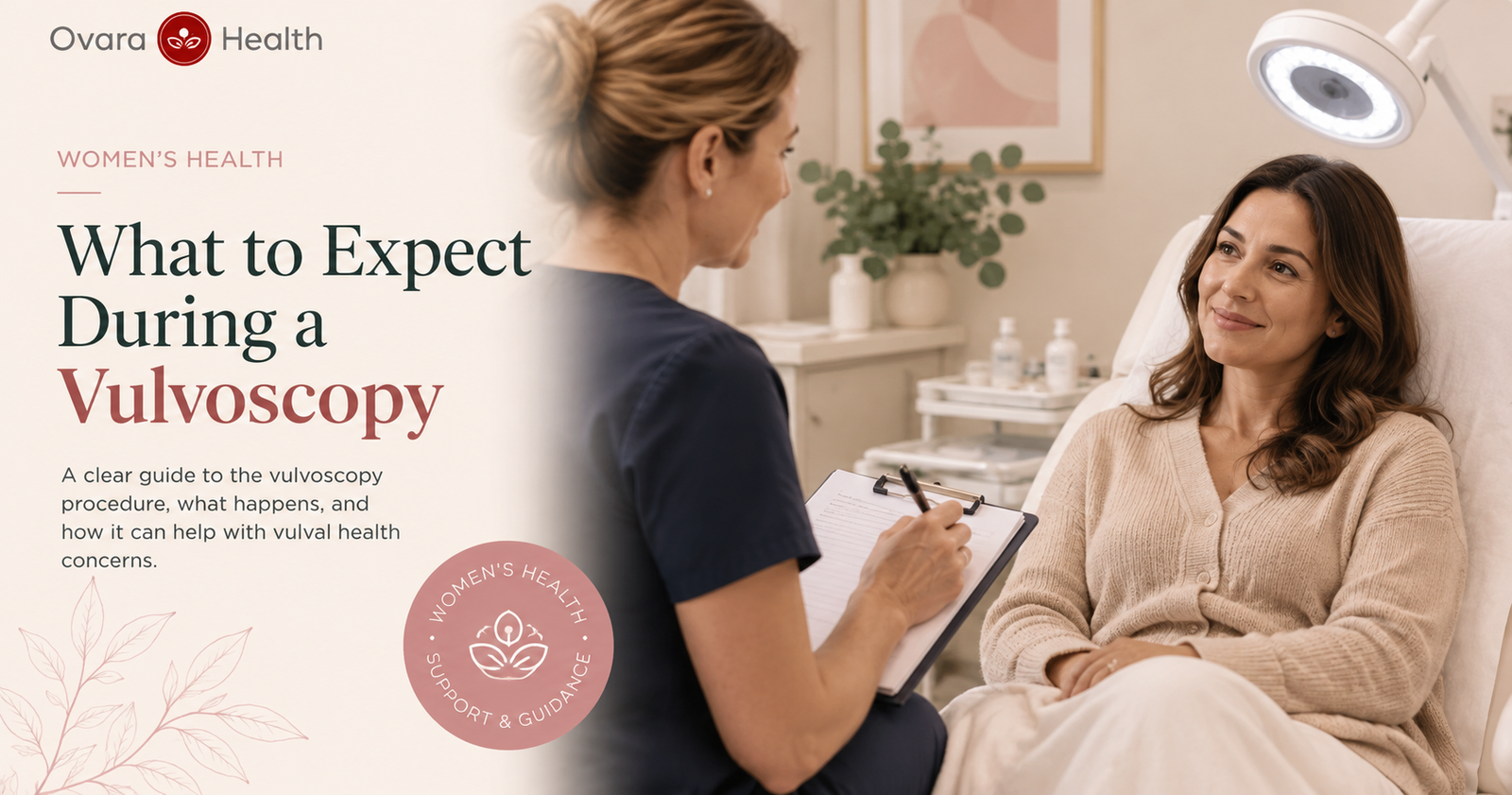
What to Expect During a Vulvoscopy

✓ Medically reviewed
9 min read
Key Facts: A vulvoscopy is a magnified examination of the vulval skin, used to investigate persistent itching, pain, white patches or skin changes that aren’t visible to the naked eye. It’s an outpatient procedure taking 10-20 minutes, and a small biopsy can be taken at the same time if something needs a closer look.
A vulvoscopy is a detailed examination used to closely assess the skin of the vulva under magnification. It helps identify abnormal skin changes, chronic irritation, inflammatory conditions and early changes that need monitoring, and it allows your consultant to see subtle changes that aren’t visible to the naked eye and, if needed, take a small biopsy for an accurate diagnosis.
Many women haven’t heard of this examination until they’re referred for one. It’s usually recommended when symptoms such as persistent itching, burning, pain, white patches, thickened skin or sores that won’t heal affect the vulval area, and early assessment brings clarity, reassurance and timely treatment where it’s needed.
Quick Answer: A vulvoscopy uses a magnifying instrument to examine the external genital skin in detail. It’s usually recommended for persistent itching, burning, pain or visible skin changes, and it allows your consultant to spot subtle changes early and take a biopsy if needed, in the same visit.
Why shouldn’t vulval symptoms be ignored?
The vulva is sensitive tissue and can be affected by a range of skin and gynaecological conditions. Persistent symptoms may point to chronic inflammatory disorders, skin infections, autoimmune conditions or, less commonly, early changes that need monitoring.
Because many conditions look similar on a routine inspection, magnified examination improves diagnostic accuracy, which is exactly where a vulvoscopy becomes valuable.
What happens during a vulvoscopy?
A vulvoscopy is done in an outpatient clinic and doesn’t need hospital admission. You’ll lie comfortably in a position similar to a smear test.
A colposcope, which is a specialised magnifying instrument with a light, is positioned just outside the body – it doesn’t enter the vagina. Your consultant carefully inspects the vulval skin under magnification, and a mild solution may be applied to highlight any abnormal areas, helping identify inflammation, whitening, thickening, ulceration or pigment change.
If a suspicious area is found, a small biopsy may be recommended, which allows a tissue sample to be analysed in a laboratory to confirm the diagnosis. The whole procedure usually takes 10-20 minutes depending on what’s found.
Vulvoscopy vs colposcopy: what’s the difference?
Although the instruments used are similar, the area examined is different.
Colposcopy is commonly done after an abnormal smear result, whereas vulvoscopy is recommended when symptoms affect the outer genital area. In some cases both examinations are done during the same visit if there are concerns involving both areas.
“Vulval symptoms are something women often put up with for a long time before mentioning them, sometimes out of embarrassment. A vulvoscopy is a quick, low-discomfort way to get a clear answer, and in my experience most women say they wish they’d come in sooner rather than later.”
Dr Helen Staley, Consultant Gynaecologist, Colposcopy Lead
What is vulvoscopy used for in lichen sclerosus?
Lichen sclerosus is one of the most common reasons for referral. It’s a chronic inflammatory skin condition that affects the vulval region and can cause severe itching, white or shiny skin patches, skin thinning, pain during intercourse and cracking or bleeding.
Because lichen sclerosus can increase long-term risk in the area if left unmonitored, regular review matters. Magnified examination lets your consultant track subtle changes over time, and if the diagnosis isn’t clear, a biopsy confirms it and rules out anything that needs more urgent attention. Early diagnosis allows treatment with prescribed topical steroids, which significantly reduce symptoms and help prevent progression.
Is a vulvoscopy painful, and what’s the biopsy like?
What’s the aftercare for a vulvoscopy?
If no biopsy was taken, you can usually resume normal activities straight away. If a biopsy was done, aftercare usually includes:
If healing seems delayed, or you notice signs of infection, medical review is recommended.
Frequently asked questions
Is vulvoscopy painful?
The examination itself generally isn’t painful. Some women with already-inflamed skin may feel mild discomfort. If a biopsy is taken, local anaesthetic minimises pain during tissue removal, with mild soreness possible for a few days afterwards.
How long does a vulval biopsy take to heal?
Healing typically takes 1-2 weeks. Mild tenderness, light spotting and a small scab are all normal during this time. Avoiding friction, tight clothing and irritants supports recovery.
What is the aftercare for a vulvoscopy?
If no biopsy was taken, normal activities can usually resume immediately. If a biopsy was done, keep the area clean and dry, wear loose cotton underwear, avoid perfumed products and intercourse for a few days, and apply any prescribed ointment.
When should I seek assessment for vulval symptoms?
You should seek assessment for persistent itching, skin colour changes, thickened or thinning skin, recurrent cracks or sores, or unexplained pain in the vulval area.
What does a vulvoscopy check for?
It checks for chronic inflammatory conditions, skin infections, lichen sclerosus and other changes to the vulval skin that need monitoring or treatment.
Do I need a referral for a vulvoscopy?
No. You don’t need a GP referral to book a vulvoscopy at Ovara Health, and same-week appointments are usually available.
How is a vulvoscopy different from a smear test?
A smear test samples cells from the cervix to screen for HPV and cell changes. A vulvoscopy examines the external vulval skin under magnification and doesn’t involve the cervix at all.
Can I have sex before a vulvoscopy?
Yes, there’s no need to avoid sex before the examination itself. If a biopsy is taken during the appointment, you’ll be advised to avoid intercourse for a few days afterwards.
Will I need more than one vulvoscopy?
Many women only need one to get a clear diagnosis. If you have a chronic condition such as lichen sclerosus, periodic review vulvoscopies may be recommended to monitor the area over time.
Is vulvoscopy the same as vulvar biopsy?
No. A vulvoscopy is the magnified examination itself. A biopsy is an additional step, only done if an area looks like it needs closer laboratory analysis.
What conditions can a vulvoscopy help diagnose?
It can help identify lichen sclerosus, dermatitis, chronic infections, and other skin changes affecting the vulva, allowing early and more accurate treatment.
Can vulval itching be something other than thrush?
Yes. While thrush is common, persistent itching that doesn’t respond to standard treatment can have other causes, including lichen sclerosus or other skin conditions, which is exactly when a vulvoscopy is useful.
Sources and further reading
This article is for general information only and does not constitute medical advice. It is not a substitute for assessment by a qualified clinician.
Specialist vulval assessment in Chelsea, London
At Ovara Health you can book a vulvoscopy without a GP referral. Same-week appointments are usually available, and if a biopsy is needed, it can be done in the same visit. Bupa, AXA, Aviva, Vitality, WPA and CIGNA are accepted, and self-pay prices are available.
Book a Consultation
Call Us: 0207 751 4488
Medically reviewed by Dr Helen Staley, Consultant Gynaecologist (GMC 06148987). Last reviewed: October 2026.