
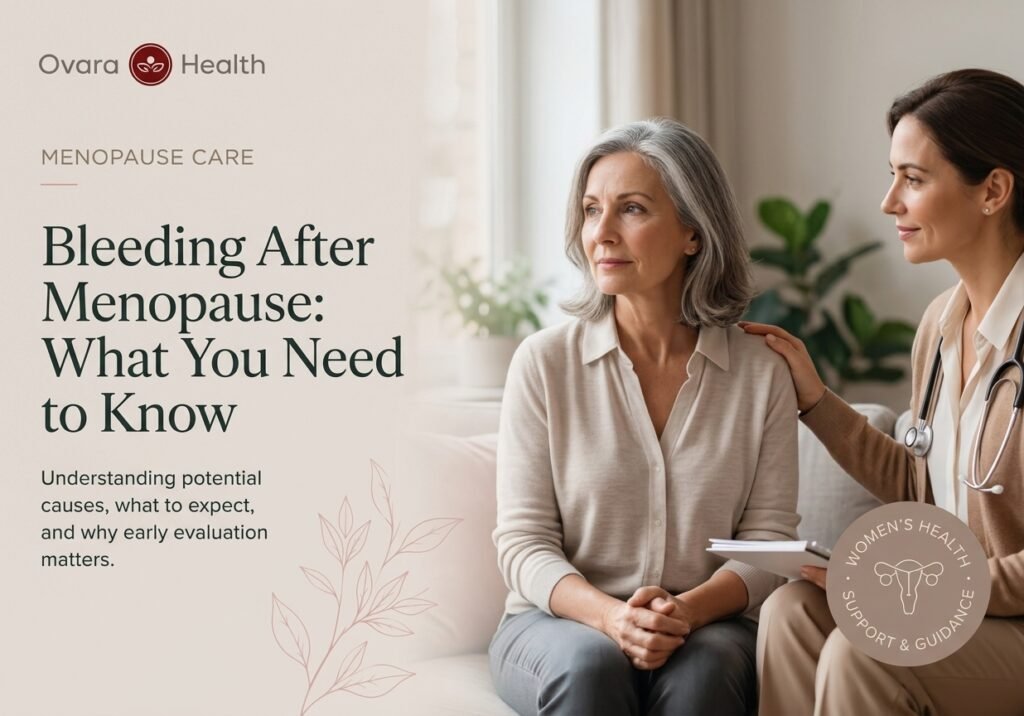
Bleeding After Menopause: Causes, Symptoms and When to See a Specialist
Medically reviewed by Mr Amer Raza MBBS MRCOG, Consultant Gynaecologist, Ovara Health (GMC 5205372) | Last reviewed: 2 July 2026
Key Facts: Bleeding after menopause (postmenopausal bleeding) is any vaginal bleeding 12 or more months after your last period. It is never considered normal and always needs specialist assessment. Around 90% of cases have a benign cause, but roughly 10% are linked to endometrial cancer, which is why NICE recommends urgent review within two weeks.
What is postmenopausal bleeding?
Bleeding after menopause, also called postmenopausal bleeding, is any vaginal bleeding that occurs 12 or more months after your last period. It is never normal and should always be assessed by a specialist. In most cases the cause is benign, but investigation is essential to rule out serious conditions and to treat whatever is causing the bleeding.
Quick Answer: Any bleeding after menopause needs medical assessment, ideally within two weeks. The most common causes are thinning of the womb lining (endometrial atrophy), polyps and vaginal atrophy, and most cases are not cancer. Investigation usually involves a pelvic examination, a transvaginal ultrasound scan and sometimes a hysteroscopy.
Is it possible to have a period after menopause?
Many women ask, is it possible to have a period after menopause? The answer is no. Once menopause has occurred, regular menstrual cycles do not return. Any bleeding that happens after this point is not a period and it should be treated as a symptom that needs investigating, however light it is and even if it only happens once.
This matters because the reassurance of “it is probably just a period coming back” does not apply after menopause. The hormonal cycle that drives menstruation has ended, which means any blood has another source that needs to be identified.
What is the most common reason for bleeding after menopause?
The most frequent reason for bleeding after menopause is vaginal or uterine lining changes caused by hormone fluctuations. The tissues become thinner and more fragile when oestrogen levels drop, which is known as atrophy. Atrophic tissue is more easily irritated and can bleed after intercourse, exercise or for no obvious reason at all.
Endometrial atrophy, which is thinning of the lining of the womb itself, is the single most common finding when postmenopausal bleeding is investigated. It is benign and very treatable, but it can only be confirmed once other causes have been ruled out.
What are the four causes of postmenopausal bleeding?
There are several possible causes of bleeding after menopause, but the four main ones are:
Endometrial atrophy
Thinning of the womb lining. As oestrogen falls after menopause, the endometrium becomes thin and fragile and small blood vessels near the surface can break down, causing spotting or light bleeding. It is the most common cause and is benign.
Endometrial hyperplasia
Thickening of the womb lining, sometimes linked to hormone imbalance. Hyperplasia matters because certain types can progress to endometrial cancer over time if left untreated, which is why it is always investigated and monitored or treated once found.
Polyps
Small growths on the cervix or inside the uterus. Polyps are usually benign and often cause intermittent spotting or bleeding after intercourse. They can be removed during a hysteroscopy, which both confirms the diagnosis and treats the problem in the same procedure.
Endometrial cancer
Although less common, it must always be ruled out. Knowing what are four causes of postmenopausal bleeding helps women understand why medical review is essential whenever bleeding occurs. When endometrial cancer is caught at an early stage because a woman acted on postmenopausal bleeding promptly, treatment outcomes are significantly better.
Beyond these four, other causes include vaginal atrophy (thinning of the vaginal tissue itself), cervical polyps, infections, bleeding related to hormone replacement therapy and, less commonly, side effects of blood-thinning medication. Your Consultant will consider all of these during assessment.
Can HRT cause bleeding after menopause?
Yes. Bleeding is relatively common in the first three to six months after starting or changing hormone replacement therapy, particularly with continuous combined HRT, and it usually settles as the body adjusts.
However, bleeding that starts after six months on the same HRT, becomes heavier, or returns after a period of no bleeding should not be put down to the HRT without assessment. The same investigations apply as for any other postmenopausal bleeding, and it is important not to stop or change your HRT on your own before being seen. Bring a note of your exact HRT type and dose to your appointment, because it genuinely helps with interpreting the bleeding pattern.
Are you bleeding after menopause due to fibroids?
Yes, fibroids can sometimes cause bleeding after menopause, even though they usually shrink as oestrogen levels drop. If a fibroid persists, it may continue to cause symptoms such as bleeding, pelvic pressure or discomfort. Any new or ongoing bleeding still needs full assessment rather than being assumed to be fibroid-related, because more than one cause can be present at the same time.
You can read more about how fibroids cause bleeding in our guide to fibroids and bleeding between periods.
What are the symptoms of postmenopausal bleeding?
Symptoms can vary from very light spotting to heavier bleeding similar to a period. Some women notice brown or pink discharge, while others experience bright red bleeding. Pelvic pain, discomfort during intercourse or a feeling of pressure can accompany the bleeding, although many women have no other symptoms at all.
When to be seen urgently
You should be seen within two weeks if you have any of the following:
- Any bleeding 12 or more months after your last period
- Brown or pink discharge with no obvious cause
- Bleeding after sex
- Pelvic pain alongside any bleeding
Noticed bleeding after menopause? You do not need a GP referral to be seen at Ovara Health. Call us on 0207 751 4488 or book a menopause consultation for a prompt private assessment in Chelsea, with same-week appointments available.
Not ready to book? Send us an enquiry instead
Book a same-week menopause assessment →
Emergency: call 999 or go to A&E if you have very heavy bleeding that soaks through pads hourly, dizziness, fainting or collapse. These need immediate emergency care, not an outpatient appointment.
What colour is postmenopausal bleeding?
Postmenopausal bleeding can range from bright red to dark brown or pink. It may appear as light spotting, a watery discharge tinged with blood, or heavier bleeding similar to a period. Some women notice brown discharge rather than fresh blood, which is older blood leaving the body. The colour does not reliably indicate the cause, which is why every colour and pattern of bleeding after menopause needs the same assessment.
Is bleeding after menopause always cancer?
No. The majority of postmenopausal bleeding is not cancer, but all cases must be investigated. Around 10% of postmenopausal bleeding is linked to endometrial cancer, which is why prompt assessment is essential. Put the other way round, roughly nine in ten women investigated for bleeding after menopause will have a benign explanation such as atrophy or a polyp, and will leave their appointment reassured with a clear treatment plan.
How is bleeding after menopause investigated?
Investigation is straightforward and usually completed quickly. At Ovara Health the assessment typically takes place in a single visit and includes:
- A consultation and history covering your bleeding pattern, HRT use, medication and general health
- A pelvic examination to check the vulva, vagina and cervix for any visible source of bleeding
- A transvaginal ultrasound scan to measure the thickness of the womb lining. A thin lining (4mm or less) makes a serious cause very unlikely
- A hysteroscopy in some cases, where a fine camera examines the inside of the womb directly and polyps can be removed at the same time. You can read exactly what this involves in our guide to what happens during a hysteroscopy
- An endometrial biopsy if the lining looks thickened or irregular, where a small tissue sample is tested to give a definitive answer
Most women do not need every test. Your Consultant will explain which investigations apply to you and why, and results are typically discussed with you promptly so you are not left waiting and worrying.
How is postmenopausal bleeding treated?
Treatment depends entirely on the cause, which is why investigation comes first. As a guide:
What happens at your appointment at Ovara Health?
Knowing what to expect takes a lot of the worry out of the first visit. When you attend our Chelsea clinic about bleeding after menopause, your appointment usually runs as follows:
- Consultation first. Your Consultant Gynaecologist takes a full history: when the bleeding started, its pattern and colour, your HRT and medication, smear history and any other symptoms. Nothing is rushed and there is time for your questions
- Examination and scan in the same visit. A gentle pelvic examination is followed by a transvaginal ultrasound scan, so in most cases the two key investigations happen in a single appointment rather than across several NHS visits
- A clear explanation of the findings. Your Consultant explains the scan result there and then, including the thickness of the womb lining and what it means for you
- A written plan. If further tests such as a hysteroscopy or biopsy are needed, these are arranged promptly. If the findings are reassuring, you leave with that reassurance the same day
You do not need a GP referral, same-week appointments are usually available and most major insurers are accepted alongside clear self-pay pricing.
Can bleeding after menopause be prevented?
Not every cause can be prevented, but you can reduce risk and catch problems early. Keeping to a healthy weight matters because body fat produces oestrogen, and excess oestrogen after menopause is a risk factor for endometrial hyperplasia and cancer. If you use HRT, attend your reviews so the type and dose stay right for you, and always report unscheduled bleeding rather than adjusting the treatment yourself.
Attending cervical screening while you remain eligible, and treating vaginal dryness or atrophy early rather than putting up with it, both make bleeding problems less likely and less alarming when they do occur. Most importantly, any bleeding that does happen after menopause should be checked promptly. Early assessment is the single most effective step, because every serious cause of postmenopausal bleeding is more treatable the earlier it is found.
Frequently asked questions
What causes bleeding after menopause?
The most common causes of postmenopausal bleeding are endometrial atrophy (thinning of the womb lining), endometrial polyps, fibroids and vaginal atrophy. Less commonly, it can be caused by endometrial hyperplasia or endometrial cancer. HRT can also cause breakthrough bleeding in some women. All cases of postmenopausal bleeding should be assessed by a specialist.
Is bleeding after menopause always serious?
No. In the majority of cases postmenopausal bleeding has a benign cause such as vaginal atrophy or a polyp. However, it always requires investigation because around 10% of cases are linked to endometrial cancer. Do not wait to see if it stops on its own. Book an assessment so the cause can be identified and treated promptly.
Is bleeding after menopause always cancer?
No. Most postmenopausal bleeding is not cancer. Around 90% of cases have a benign cause including endometrial atrophy, polyps, fibroids or vaginal dryness. However, approximately 10% of cases are linked to endometrial cancer, which is why all postmenopausal bleeding must be investigated without delay. Early investigation leads to early diagnosis and better outcomes.
What colour is postmenopausal bleeding?
Postmenopausal bleeding can range from bright red to dark brown or pink. It may appear as light spotting, a watery discharge tinged with blood, or heavier bleeding similar to a period. Some women notice brown discharge, which is older blood. Any colour of bleeding after menopause is abnormal and should be assessed by a gynaecologist.
What does postmenopausal bleeding look like?
Postmenopausal bleeding can look like a light pink or brown discharge, bright red spotting, or heavier period-like bleeding with clots. It may be continuous or intermittent. Some women notice it only after sex. Any vaginal bleeding or bloodstained discharge that occurs more than 12 months after your last period is considered postmenopausal bleeding and needs investigation.
Can postmenopausal bleeding stop on its own?
It may appear to stop, but this does not mean the underlying cause has resolved. Postmenopausal bleeding should never be left uninvestigated, even if it seems to have stopped. Conditions including endometrial cancer can cause intermittent bleeding that comes and goes. If you have experienced any postmenopausal bleeding, book an assessment regardless of whether it has stopped.
What is the most common reason for bleeding after menopause?
The most common cause of postmenopausal bleeding is endometrial atrophy, which is thinning of the lining of the womb due to lower oestrogen levels after menopause. Endometrial and cervical polyps are also very common. Vaginal atrophy, which causes the vaginal walls to become thin and fragile, is another frequent cause, particularly of post-coital (after sex) bleeding.
Can fibroids cause bleeding after menopause?
Yes, fibroids can cause bleeding after menopause, although they are less common in postmenopausal women as oestrogen levels fall. Fibroids that were present before menopause may continue to cause bleeding if they are large or submucosal. HRT can also cause existing fibroids to remain active. Any bleeding related to fibroids after menopause should be investigated to rule out other causes.
Can HRT cause bleeding after menopause?
Yes. Breakthrough bleeding is relatively common in the first three to six months after starting or changing HRT, particularly continuous combined HRT, and usually settles. Bleeding that starts after six months on the same HRT, becomes heavier or returns after stopping should be investigated in the same way as any other postmenopausal bleeding. Do not stop or change your HRT without advice.
What does heavy bright red bleeding after menopause mean?
Heavy bright red bleeding after menopause is fresh blood and should be assessed urgently. While it can be caused by benign conditions such as polyps or endometrial atrophy, heavy bright red bleeding is also associated with endometrial cancer and should not be ignored. If you are soaking through a pad, feel faint or dizzy, call 999 or go to your nearest A&E.
How is postmenopausal bleeding investigated?
The standard investigation for postmenopausal bleeding includes a pelvic examination, a transvaginal ultrasound scan to assess the thickness of the womb lining, and in some cases a hysteroscopy (a camera examination of the womb) with biopsy. At Ovara Health we can carry out consultation and ultrasound scan in a single same-week appointment at our Chelsea clinic.
Can bleeding after menopause be caused by stress?
Stress alone does not directly cause postmenopausal bleeding. Unlike in women who are still having periods, the hormonal fluctuations triggered by stress do not cause breakthrough bleeding after menopause. If you are experiencing postmenopausal bleeding, a physical cause should always be investigated. Do not attribute it to stress without first having an assessment with a gynaecologist.
How quickly can I be seen privately for bleeding after menopause?
At Ovara Health in Chelsea, same-week appointments are usually available and no GP referral is needed. A menopause consultation starts from £310 and the consultation and transvaginal ultrasound scan can typically be completed in a single visit, with results explained to you promptly.
When should I see a doctor about bleeding after menopause?
You should see a specialist as soon as possible, ideally within two weeks of noticing any bleeding. NICE guidelines recommend urgent referral for all women with postmenopausal bleeding. Do not wait for a GP referral if you are concerned. At Ovara Health we offer same-week private assessments including ultrasound scan, so you can get answers quickly.
Sources and further reading
- NHS: Postmenopausal Bleeding
- NICE Guideline NG12: Suspected Cancer Recognition and Referral
- RCOG: Postmenopausal Bleeding Green-top Guideline No.67
This article is for general information only and does not constitute medical advice. It is not a substitute for assessment by a qualified clinician.
Specialist menopause care in Chelsea, London
At Ovara Health you can see a Consultant Gynaecologist about bleeding after menopause without a GP referral. Same-week appointments are available, a menopause consultation starts from £310 and consultation with ultrasound can usually be completed in one visit. Bupa, AXA, Aviva, Vitality, WPA and CIGNA are accepted, and self-pay prices are available.
Book Online
Call Us: 0207 751 4488
Request a Callback
Written by Kerry Archer. Medically reviewed by Mr Amer Raza MBBS MRCOG, Consultant Gynaecologist (GMC 5205372). Last reviewed: 2 July 2026.