
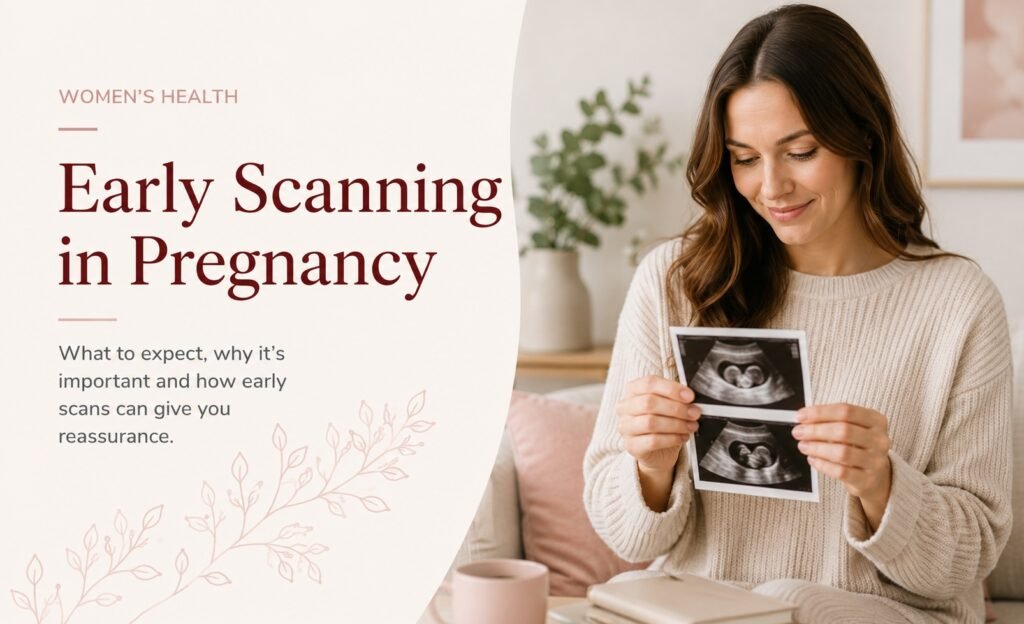
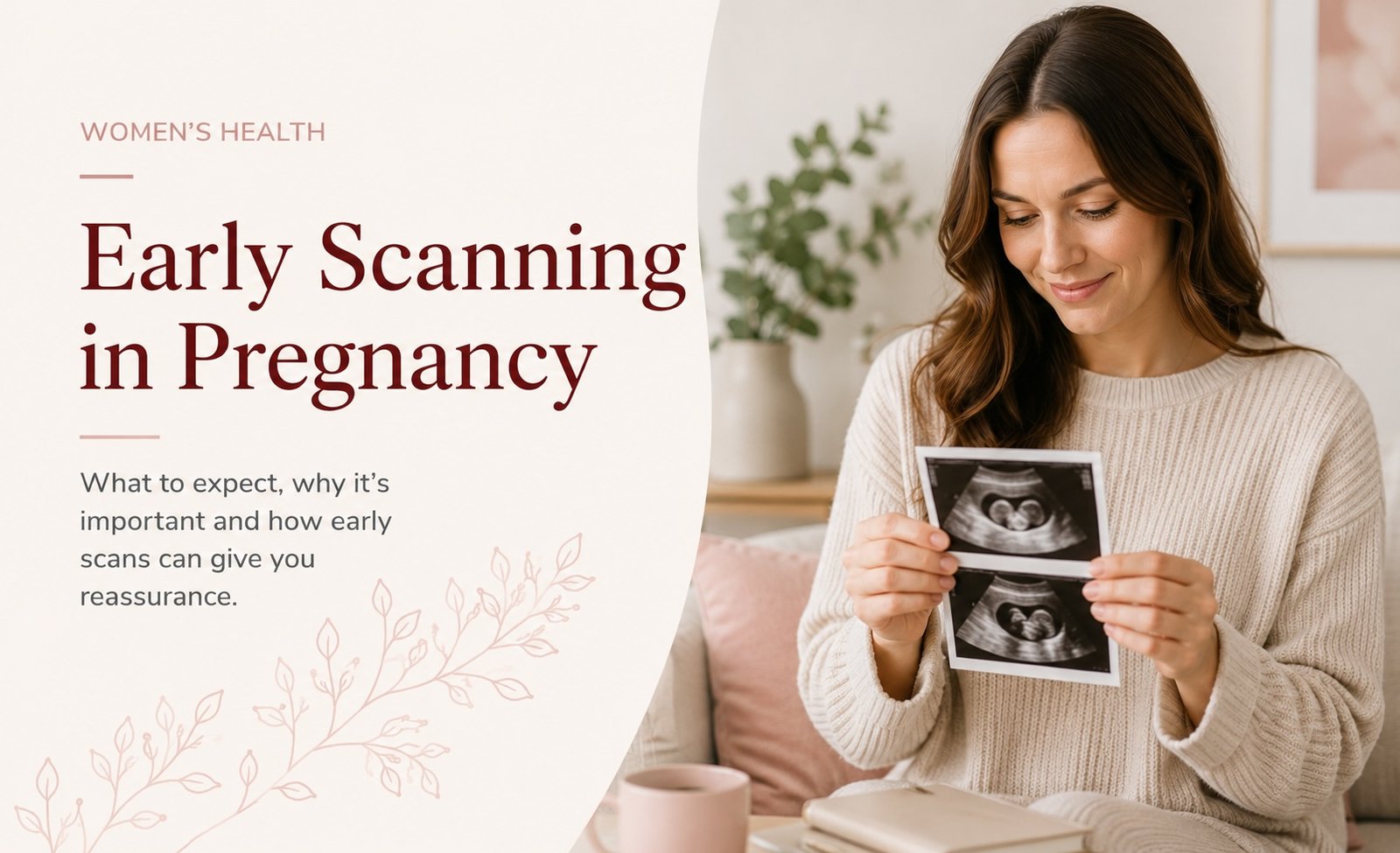
How Early Can You Have a Pregnancy Scan? Earliest Scan Options at 3, 4, 6 and 8 Weeks
Medically reviewed by Mr Amer Raza MBBS MRCOG, Consultant Gynaecologist, Ovara Health (GMC 5205372) | Last reviewed: 4 July 2026
Key Facts: The earliest a pregnancy scan can reliably confirm a heartbeat is from around 6 weeks. A gestational sac may be visible from 4½ to 5 weeks on a transvaginal scan. Scans before 6 weeks often need a follow-up to confirm findings. Most private early pregnancy scans in the UK take place between 6 and 8 weeks.
What is an early pregnancy scan?
An early pregnancy scan is an ultrasound carried out in the first weeks of pregnancy, usually between 5 and 10 weeks. It is different from the 12-week dating scan and the 20-week anomaly scan, which happen later and serve a different purpose. An early scan is done using a transvaginal probe, which is inserted gently into the vagina and gives a much clearer picture than a scan over the abdomen at this stage, because the pregnancy is still very small.
The main purposes of an early scan are to confirm that the pregnancy is developing inside the womb (rather than in a fallopian tube, which is called an ectopic pregnancy), to check for a heartbeat, to confirm whether you are expecting one baby or more, and to estimate how many weeks pregnant you are.
How early can you have a pregnancy scan? Week by week
What a scan can show changes quickly from week to week in early pregnancy. Here is what to expect at each stage.
3 weeks
At 3 weeks, it is generally too soon to see much on an ultrasound scan. The fertilised egg has only just implanted in the womb, and the developing pregnancy is microscopic. A scan this early will not usually detect a gestational sac or heartbeat. Doctors usually advise waiting a little longer for a meaningful result, and rely on blood tests to confirm rising pregnancy hormone levels in the meantime.
4 weeks
At 4 weeks, a tiny gestational sac may begin to appear in the womb. The embryo itself is still too small to be seen, but the scan can confirm that a pregnancy has started in the correct location. This stage is often helpful for women who have had an ectopic pregnancy before, as the scan can check the pregnancy is inside the uterus. Even a small sac is an encouraging first sign.
5 weeks
By 5 weeks, the gestational sac is usually clearly visible on a transvaginal scan, and a yolk sac often becomes visible too. This is one of the structures that supports the early embryo before the placenta takes over. A heartbeat is not usually reliably seen at this stage, so a scan this early is more about confirming location and progress than getting full reassurance.
6 weeks
By 6 weeks, the scan usually provides much clearer information. It can often show a visible gestational sac, yolk sac and, in many cases, a tiny fetal heartbeat. This is typically the point at which people describe having their “first” pregnancy scan, and it gives valuable reassurance that the pregnancy is developing normally. The sonographer also checks that the ovaries and womb look healthy and that there are no signs of internal bleeding or an ectopic pregnancy.
7 to 8 weeks
By 7 to 8 weeks, an early scan typically shows a clearly visible fetal pole with a strong, regular heartbeat, and early limb buds may begin to appear. Crown-rump length measurements at this stage are highly accurate for dating the pregnancy. An 8-week scan offers strong reassurance after the higher-risk early weeks and is a good time to confirm whether you are expecting one baby or more.
What are the three key scans in pregnancy?
Most women have three key scans across a straightforward pregnancy, each with a different purpose:
- Early pregnancy scan – usually between 6 and 8 weeks, to confirm pregnancy location and viability
- Dating scan – around 12 weeks, to measure the baby and estimate the due date
- Anomaly scan – at about 20 weeks, to examine the baby’s organs and growth
Later in pregnancy, some women also have a growth scan in the third trimester if there are concerns about the baby’s size or wellbeing. Each scan has a different purpose and helps ensure both mother and baby remain healthy throughout pregnancy.
What does an early pregnancy scan check for?
An early scan is looking for several specific things, not just “is there a baby”:
- Location. Confirming the pregnancy is inside the womb, which rules out an ectopic pregnancy
- Viability. Checking for a heartbeat once the pregnancy is far enough along to show one
- Number of babies. Confirming whether you are expecting one baby, twins, or more
- Dating. Measuring the gestational sac or crown-rump length to estimate how many weeks pregnant you are
- Early bleeding. Checking for any sign of a small bleed near the pregnancy, which is common and often resolves on its own
Bleeding, pain, or a history of ectopic pregnancy or miscarriage? You do not need a GP referral to be seen at Ovara Health. Call us on 0207 751 4488 or get in touch to arrange a prompt early scan. Sudden severe one-sided pain needs same-day emergency care: call 999 or go to A&E.
Book an early pregnancy scan in Chelsea →
When should you book an early pregnancy scan?
Women often choose to book an early pregnancy scan between 6 and 8 weeks for routine reassurance, since this timing provides the clearest results without being too early. If there are symptoms such as pain, bleeding, or a history of miscarriage or ectopic pregnancy, a scan may be arranged sooner, from around 5 weeks. Booking early ensures expert monitoring throughout the first trimester rather than waiting and worrying.
Is 4 weeks pregnant too early to see a doctor?
It is never too early to contact a healthcare professional. Even at 4 weeks, a doctor can arrange blood tests to confirm the pregnancy and discuss next steps, and an early appointment also provides guidance on nutrition, supplements and safe lifestyle changes that support a healthy start to pregnancy. A scan at 4 weeks may only show a small gestational sac, which is why doctors often suggest waiting a little longer for a fuller picture, but there is no reason to delay getting advice.
What happens during an early pregnancy scan?
An early scan is done using a transvaginal probe, which gives a much clearer image than scanning over the abdomen at this early stage. You do not need a full bladder for this type of scan. The probe is thin, covered with a protective sheath, and gently inserted; most women find it no more uncomfortable than a smear test. The scan itself typically takes 15 to 20 minutes, and the sonographer will talk you through what they can see as they go.
How accurate is an early pregnancy scan?
Early scans are very reliable for confirming location and, from around 6 weeks, for confirming a heartbeat. Dating by crown-rump length is most accurate between 7 and 13 weeks. If a scan is done very early, before 6 weeks, and no heartbeat is seen yet, this does not necessarily mean anything is wrong. It usually means a follow-up scan in 1 to 2 weeks is needed to see how things have progressed, since dates can be uncertain, particularly with irregular cycles.
Early pregnancy scan at Ovara Health, Chelsea
Women in and around Chelsea can book an early pregnancy scan at Ovara Health for expert care in a calm, private setting. Scans are carried out by experienced sonographers and Consultants who specialise in early pregnancy, with results discussed with you at the appointment rather than by letter days later. No GP referral is needed, and same-week appointments are usually available.
Frequently asked questions
How early can you have a pregnancy scan?
A pregnancy scan can technically be attempted from around 5 weeks, but results are far more reliable from 6 weeks onwards, when a heartbeat can usually be confirmed. Before 5 weeks, a scan is unlikely to show anything meaningful.
What is the earliest you can see a heartbeat on a scan?
A fetal heartbeat can sometimes be seen from around 5½ to 6 weeks on a transvaginal scan, though it is more reliably detected by 6 to 7 weeks. If no heartbeat is seen before 6 weeks, a follow-up scan is usually recommended rather than treating it as a concern.
Can you have a scan at 4 weeks pregnant?
Yes, a scan can be carried out at 4 weeks, but it will usually only show a tiny gestational sac, not the embryo or a heartbeat. It can still be useful to confirm the pregnancy is in the right place, particularly after a previous ectopic pregnancy.
Is 4 weeks pregnant too early to see a doctor?
No. It is never too early to see a doctor once you know you are pregnant. Blood tests can confirm and monitor the pregnancy even before a scan would show much, and early advice on supplements and lifestyle is valuable from the start.
What week is the early pregnancy scan usually done?
Most private early pregnancy scans in the UK are booked between 6 and 8 weeks, as this is when results are clearest. Scans are brought forward if there are symptoms such as bleeding or pain, or a relevant medical history.
Do I need a full bladder for an early pregnancy scan?
No. Early scans are usually done transvaginally, which does not require a full bladder. This is different from some later pregnancy scans, which use an abdominal probe and do need a full bladder for a clear image.
What is the difference between a transvaginal and transabdominal scan?
A transvaginal scan uses a thin probe inserted into the vagina and gives the clearest images in very early pregnancy, when the baby is still tiny. A transabdominal scan is done over the abdomen and is generally used later in pregnancy, once there is more to see.
Why might I need an early scan before 6 weeks?
Scanning earlier than 6 weeks is usually reserved for women with symptoms such as pain or bleeding, a history of ectopic pregnancy or miscarriage, or those who conceived through fertility treatment and need closer monitoring.
Can an early scan detect an ectopic pregnancy?
Yes, one of the main purposes of an early scan is to confirm the pregnancy is inside the womb rather than in a fallopian tube. This is particularly important for anyone with pain, bleeding, or a previous ectopic pregnancy.
What if no heartbeat is seen at 6 weeks?
This is common and does not automatically mean a problem. Dates can be less certain than expected, especially with irregular cycles, so a follow-up scan 1 to 2 weeks later is the usual next step to confirm progress.
Is an early pregnancy scan accurate for dating?
Yes. Measuring the crown-rump length of the embryo, usually possible from around 7 weeks, is one of the most accurate ways to date a pregnancy, more accurate than dating from your last period alone.
How long does an early pregnancy scan take?
The scan itself usually takes 15 to 20 minutes, with time afterwards to discuss the findings and next steps with the sonographer or Consultant.
Do I need a referral for an early pregnancy scan?
No GP referral is needed at Ovara Health. You can book directly and be seen quickly, which is particularly helpful if you are anxious and want reassurance sooner rather than later.
How much does an early pregnancy scan cost at Ovara Health?
A standalone ultrasound scan starts from £300. A combined consultation and scan is also available. Current pricing is confirmed when you book.
Sources and further reading
- NHS: When Pregnancy Starts and Early Antenatal Care
- NICE Guideline NG201: Antenatal Care
- RCOG: Patient Information
- Tommy’s: Early Pregnancy Information
This article is for general information only and does not constitute medical advice. It is not a substitute for assessment by a qualified clinician.
Private early pregnancy scans in Chelsea, London
At Ovara Health you can book an early pregnancy scan without a GP referral. Same-week appointments are usually available, results are discussed with you at the time of your scan, and most major insurers are accepted alongside clear self-pay pricing.
Book Online
Call Us: 0207 751 4488
Request a Callback
Written by Kerry Archer. Medically reviewed by Mr Amer Raza MBBS MRCOG, Consultant Gynaecologist (GMC 5205372). Last reviewed: 4 July 2026.