

Medically reviewed by Mr Amer Raza, MBBS MRCOG, Consultant Gynaecologist, Ovara Health. GMC No. 5205372. Last reviewed June 2026.

An abnormal smear test means cell changes were found on the cervix during screening. Most abnormal results are caused by HPV and do not indicate cancer. Around 1 in 20 smear tests in the UK come back abnormal. Early detection through cervical screening is highly effective at preventing cervical cancer from developing.
If you have received an abnormal smear test result, the first thing to understand is that it does not mean you have cancer. Cervical screening is designed to detect early cell changes that can be monitored or treated long before they develop into anything serious. An abnormal result is common, often temporary, and in most cases linked to HPV, a virus the immune system naturally clears over time.
The question I am asked most often by patients at this point is whether this could mean cancer. In the vast majority of cases, the answer is no. Most abnormal results reflect minor changes that either resolve on their own or require straightforward monitoring.
What Does an Abnormal Smear Test Mean?
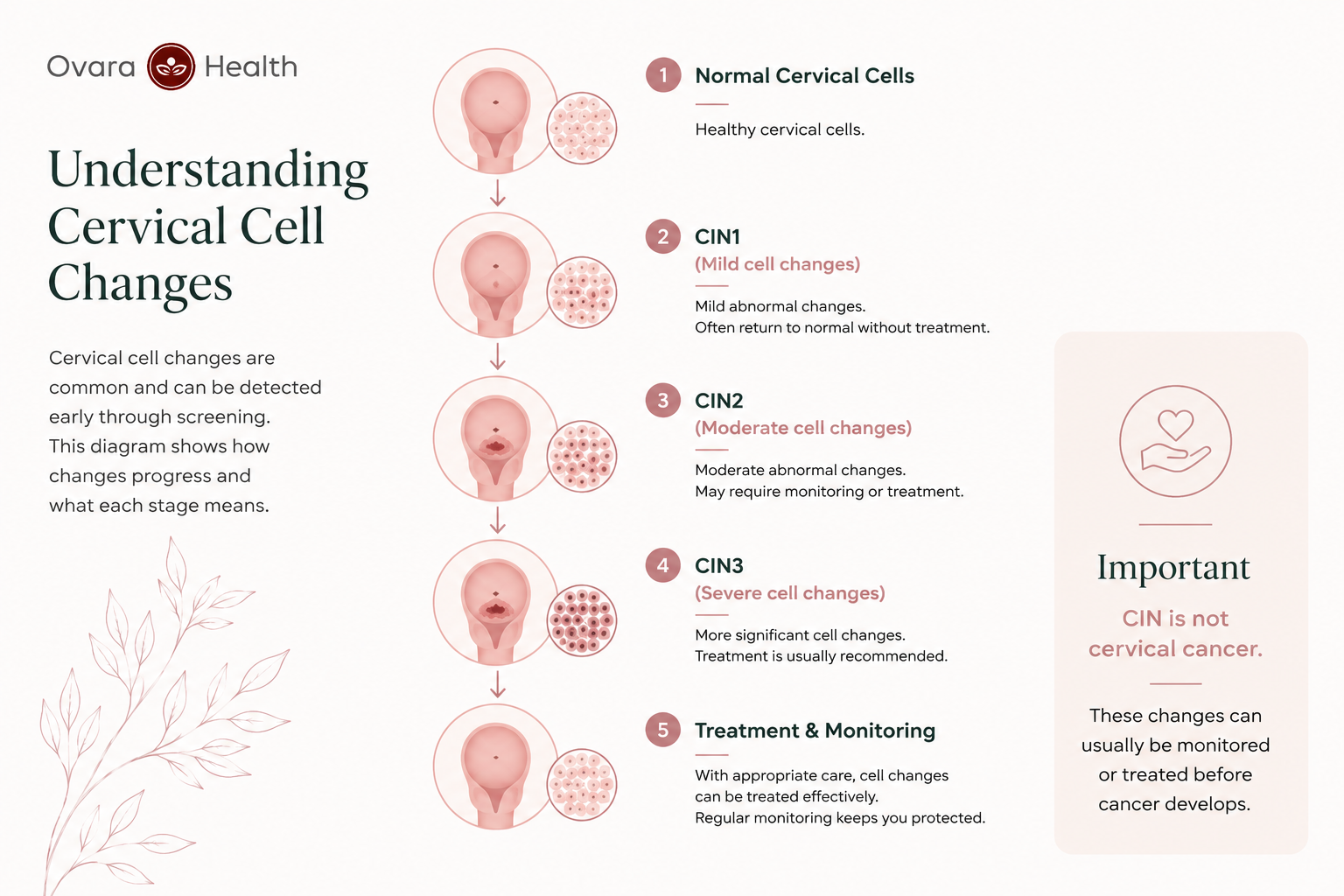
A smear test, also known as cervical screening, takes a small sample of cells from the cervix. An abnormal result means the cells look different from what would typically be expected. This does not mean you have cancer. It means changes have been detected that need further assessment or monitoring. Most abnormal results fall into one of five categories, from minor borderline changes through to more significant high-grade abnormalities. More significant changes are referred for a colposcopy.
What Is the Link Between an Abnormal Smear and HPV?
The majority of abnormal smear results are linked to HPV (human papillomavirus). HPV is extremely common. Most of the time the immune system clears it naturally within one to two years. When HPV persists, it can cause cell changes in the cervix — and those changes are what the smear test detects. For more on how HPV is managed, see our dedicated guide.
What Are the Different Categories of Abnormal Smear Results?
UK cervical screening results are classified into five categories. Understanding your category clarifies what happens next.
| Result | What it means | Typical next step |
|---|---|---|
| Borderline changes | Minor cell changes, often temporary | Repeat smear in 12 months |
| Low-grade dyskaryosis (CIN 1) | Mild abnormality, often clears naturally | Colposcopy referral |
| High-grade dyskaryosis (CIN 2/3) | Moderate to severe changes | Colposcopy and possible cell removal |
| Glandular cell abnormality | Changes in glandular cells | Urgent colposcopy |
| Inadequate sample | Not enough cells to assess | Repeat smear within 3 months |
Call 999 or go to A&E if you experience sudden severe pelvic pain, heavy unexplained bleeding, or feel faint alongside any gynaecological symptoms. Do not wait for a routine appointment.
Received an abnormal result? If you are experiencing unusual bleeding, pelvic pain, or discharge, do not wait for your next NHS appointment. Call Ovara Health on 0207 751 4488 or book online for a prompt private assessment. No GP referral needed.
Same-week private appointments. No GP referral needed.
Not ready to book? Send us an enquiry instead
What Causes Abnormal Cells on a Smear Test?
The most common cause of abnormal cervical cells is HPV infection. Other factors include persistent inflammation, hormonal changes, pregnancy, or recent infections. A common misconception is that an abnormal smear is caused by something you have done wrong. It is not.
What Happens After an Abnormal Smear Test?
What happens next depends on the category of your result. Most women with borderline or low-grade changes will be asked to return for a repeat smear in 12 months. For moderate or high-grade changes, you will be referred for a colposcopy. Privately, this appointment can typically be arranged within days of your result.
How Is an Abnormal Smear Test Treated?
Not all abnormal smear results require treatment. Borderline changes and CIN 1 are usually monitored rather than treated immediately. CIN 2 and CIN 3 typically require LLETZ (large loop excision of the transformation zone) — a quick outpatient procedure under local anaesthetic, usually around 15 minutes, with most patients back to normal within a few days.
Can an Abnormal Smear Result Go Back to Normal?
Yes. Many abnormal results, particularly borderline changes and CIN 1, return to normal without any treatment. The immune system is often able to clear the HPV infection that caused the changes. The key is appropriate follow-up — do not ignore an abnormal result or assume it will definitely resolve on its own.
How Often Should You Have a Smear Test After an Abnormal Result?
Most women with borderline or low-grade changes are recalled for a repeat smear after 12 months. After LLETZ treatment, follow-up smears are typically arranged at 6 months, then annually before returning to routine 3-yearly screening. Your specialist will advise on your specific schedule.
Frequently Asked Questions
What does an abnormal smear test mean?
Does an abnormal smear test mean I have cancer?
How common are abnormal smear results in the UK?
What is the difference between borderline changes and CIN?
What happens after an abnormal smear test?
What is a colposcopy and does it hurt?
Can an abnormal smear result go back to normal?
What causes abnormal cervical cells?
Should I be worried if I have HPV and an abnormal smear?
How quickly will I be referred after an abnormal result?
Can I be seen privately for follow-up after an abnormal smear?
How is CIN treated if it does not resolve on its own?
NHS: Cervical Screening
NICE: Cervical Cancer (NG12)
RCOG: Colposcopy Patient Information Leaflet
This article is for informational purposes only and does not constitute medical advice. If you have concerns about your cervical screening results, please consult a qualified medical professional.
Ready to Talk to a Specialist?
Our consultant gynaecologists offer prompt private appointments for colposcopy, biopsy and cervical treatment at our Chelsea clinic.
274 Fulham Road, Chelsea, London SW10 9EW
0207 751 4488 · No GP referral needed