
Fertility screening tests
Fertility screening tests are structured medical investigations used to evaluate reproductive health and identify possible reasons for difficulty conceiving. They assess hormone balance, ovulation, ovarian reserve, uterine health, fallopian tube function and sperm quality. These tests help determine whether natural conception is likely or whether medical support may be required.
When pregnancy does not happen as expected, fertility screening tests provide clinical clarity. They do not immediately diagnose infertility. Instead, they identify whether ovulation is occurring properly, whether hormone levels are balanced, whether reproductive structures are healthy and whether sperm parameters are adequate for fertilisation.
A complete and well timed assessment allows evidence based planning rather than guesswork.
What are the basic fertility tests?
The foundation includes hormone evaluation, ovulation confirmation, imaging assessment and semen analysis.
Hormone blood tests for fertility measure reproductive hormones that regulate egg development and ovulation. These include follicle stimulating hormone, luteinising hormone, oestrogen, progesterone, thyroid hormones, prolactin and anti-Müllerian hormone.
Fertility blood tests day 2-5 are performed early in the menstrual cycle to assess baseline ovarian function. Anti-Müllerian hormone testing helps estimate ovarian reserve.
A fertility ultrasound scan evaluates ovarian follicles, uterine lining thickness and structural abnormalities such as fibroids or cysts.
A semen analysis test assesses sperm concentration, movement and morphology.
If needed, fallopian tube testing may be recommended to confirm that the tubes are open.
These basic investigations provide a comprehensive overview of reproductive health before considering advanced treatment.
How is a fertility test carried out?
How is a fertility test carried out depends on which investigations are required.
Blood tests are taken at specific times in the menstrual cycle to ensure accurate hormone interpretation. Fertility blood tests day 2-5 assess baseline hormone levels. A blood test to check ovulation is usually performed around seven days before the expected period to measure progesterone.
Ultrasound imaging is performed either abdominally or transvaginally to examine reproductive organs in detail.
A semen sample is collected in a sterile container after two to five days of abstinence and analysed in a laboratory.
If fallopian tube assessment is needed, a dye based imaging test may be performed to confirm tubal patency.
Most fertility investigations are outpatient procedures and minimally invasive.
Couple fertility check and how to check fertility
A couple fertility check evaluates both partners simultaneously. Since conception depends on both egg and sperm quality, testing only one side can delay diagnosis.
How to check fertility properly involves coordinated hormone testing, ovulation assessment, imaging and semen analysis. Evaluating both partners early prevents assumptions and ensures balanced medical assessment.
This approach reduces emotional stress and shortens the time to appropriate intervention.
Female fertility tests
Female fertility tests focus on ovulation, ovarian reserve, hormone balance, uterine health and tubal function.
Hormone blood tests for fertility provide insight into ovarian response and endocrine balance. Fertility blood tests day 2-5 assess follicle stimulating hormone and luteinising hormone. Anti-Müllerian hormone reflects ovarian reserve.
A blood test to check ovulation measures progesterone to confirm egg release.
A fertility ultrasound scan evaluates follicle development, endometrial thickness and structural abnormalities.
Additional imaging may assess fallopian tube patency.
Female fertility tests aim to confirm whether egg development, ovulation and implantation conditions are favourable.
Male fertility tests
Male fertility tests primarily involve semen analysis test evaluation and hormone assessment where required.
The semen analysis test measures sperm count, concentration, motility and morphology. Hormone testing may include testosterone and other endocrine markers if abnormalities are present.
Male fertility tests are essential in early evaluation because sperm factors contribute significantly to conception outcomes.
Blood test to check ovulation and hormone blood tests for fertility
A blood test to check ovulation measures progesterone in the second half of the cycle. Elevated levels confirm ovulation has occurred.
Hormone blood tests for fertility also assess follicle stimulating hormone, luteinising hormone, thyroid hormones, prolactin and anti-Müllerian hormone.
Accurate cycle timing is essential for reliable interpretation. These tests help diagnose irregular period and fertility concerns by identifying hormonal imbalance or ovulatory dysfunction.
Fertility ultrasound scan
A fertility ultrasound scan provides visual assessment of reproductive anatomy. It evaluates ovarian follicle development, uterine lining thickness and structural abnormalities.
Not ready to book? Send us an enquiry instead
It can identify cysts, fibroids, polyps and endometrial irregularities. Serial scans may track ovulation timing.
Ultrasound complements laboratory testing and strengthens diagnostic accuracy.
Ovulation testing
Ovulation testing predicts the fertile window by detecting the luteinising hormone surge that occurs before egg release. Home urine based kits identify this surge approximately 24 to 36 hours before ovulation.
A positive result indicates that ovulation is likely imminent. However, ovulation testing does not confirm that egg release has successfully occurred. It only predicts the hormonal surge.
For confirmation, a blood test to check ovulation measuring progesterone is more reliable. Some individuals may experience hormonal fluctuations that produce positive ovulation tests without true ovulation, particularly in irregular cycles.
Ultrasound monitoring provides additional clarity by visualising follicle rupture.
Ovulation testing is useful for timing intercourse but should not replace structured medical evaluation if pregnancy does not occur after several cycles.
Understanding both its usefulness and limitations prevents misinterpretation.
Sperm count test and Semen Analysis Test
A sperm count test forms part of a semen analysis test and measures the number of sperm in a semen sample. It is a core component of male fertility evaluation.
The sample is collected after a short period of abstinence. Laboratory analysis assesses sperm concentration per millilitre, total sperm number, motility and morphology.
Low sperm count does not automatically mean infertility, but significantly reduced levels may affect natural conception chances.
Repeat testing may be recommended because sperm production cycles take approximately three months.
Temporary factors such as illness, stress, alcohol use and medication can influence results.
The semen analysis test provides objective evidence and ensures male factors are appropriately addressed early.
Increasing sperm count requires improving overall health and hormonal balance.
Maintaining a healthy weight supports testosterone production. Moderate exercise enhances circulation and endocrine stability. Adequate sleep is essential for reproductive hormone regulation.
Balanced nutrition including zinc, folate, omega 3 fatty acids and antioxidants may support sperm production.
Avoiding smoking and reducing alcohol intake significantly improves sperm parameters.
Medical conditions such as varicocele, infection or endocrine imbalance should be investigated if low counts persist.
Since sperm development takes several weeks, consistent lifestyle changes are required before improvement is measurable.
How to make sperm stronger for pregnancy?
This actually focuses on improving motility, morphology and DNA integrity.
Hydration, nutrient rich diet, regular exercise and stress reduction contribute to healthier sperm. Avoiding excessive heat exposure protects sperm production.
Smoking damages sperm DNA and reduces motility. Alcohol disrupts hormonal balance.
Medical evaluation may be required if weakness persists despite lifestyle changes.
Improving sperm strength requires patience, as sperm regeneration takes time.
Irregular period and fertility
They both are closely connected because inconsistent cycles often indicate irregular ovulation.
Hormonal imbalance, thyroid dysfunction or polycystic ovary syndrome may interfere with egg release. Hormone blood tests for fertility and ultrasound imaging help identify the cause.
Treating the underlying condition improves ovulation consistency and conception potential.
When to get fertility tested?
This depends on age and circumstances.
Evaluation is recommended after 12 months of trying if under 35, or after 6 months if over 35. Earlier assessment is advised in cases of irregular cycles, known sperm abnormalities, previous pelvic infection or miscarriage.
Early testing reduces prolonged uncertainty.
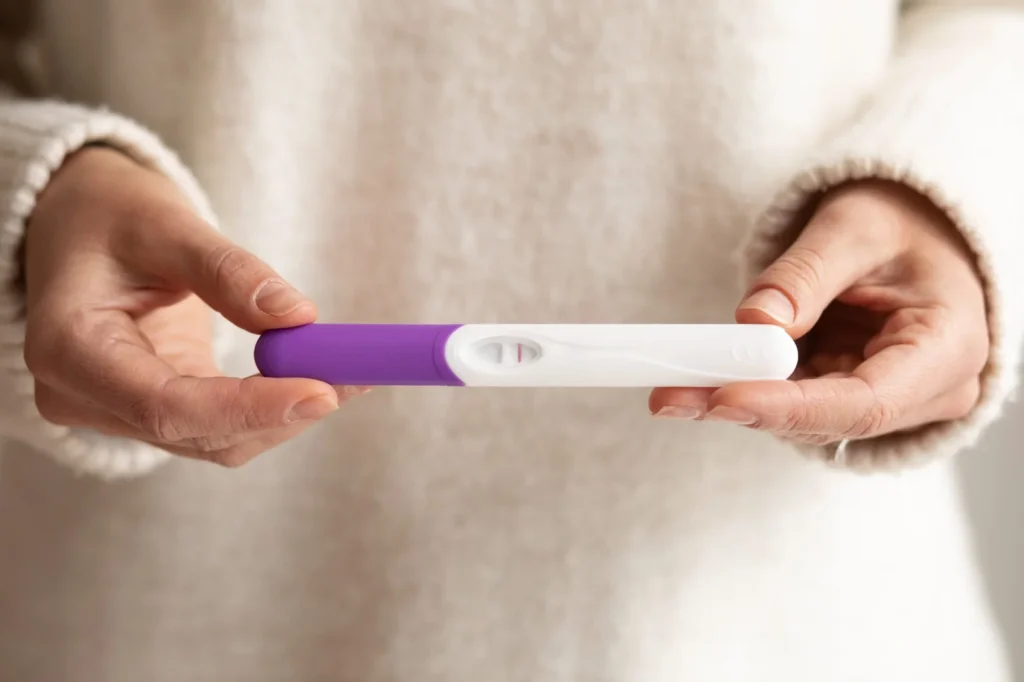
Fertility test vs Pregnancy test
Fertility test vs pregnancy test reflects two distinct purposes.
Fertility tests evaluate reproductive function and readiness for conception. Pregnancy tests confirm implantation by detecting human chorionic gonadotropin.
They measure different hormones and should not be confused.
Will ovulation test be positive if pregnant?
This is a common concern.
Ovulation tests detect luteinising hormone. Pregnancy tests detect hCG. Because these hormones are structurally similar, ovulation tests may occasionally show a faint positive in early pregnancy.
However, they are not reliable for pregnancy confirmation and should not be used for that purpose.
How early can an ovulation test detect pregnancy?
It cannot reliably detect pregnancy at any stage.
Ovulation tests are calibrated for luteinising hormone, not hCG. A pregnancy specific test should always be used for confirmation.
Is ovulation test same as pregnancy test?
No. They detect different hormones and serve different clinical functions.
Missed period positive ovulation test negative pregnancy test (H2)
Missed period positive ovulation test negative pregnancy test results may occur due to hormonal fluctuation. Only a pregnancy test can confirm implantation.
Repeat testing after 48 hours is advisable.
Will ovulation test get darker if pregnant?
It is unpredictable. Some individuals notice darker lines due to cross reaction with hCG, but this is inconsistent and unreliable.
Negative ovulation test but positive pregnancy test
This occurs because the tests measure different hormones. Pregnancy confirmation should rely solely on pregnancy testing.
What tests are done for a fertility check?
A fertility check usually includes hormone blood tests, ovulation assessment, ultrasound imaging and semen analysis. The aim is to evaluate egg development, hormone balance, reproductive anatomy and sperm quality to identify any factors affecting conception.
Hormone blood tests measure levels of follicle stimulating hormone, luteinising hormone, oestrogen, progesterone, thyroid hormones, prolactin and anti-Müllerian hormone. Some of these are performed early in the menstrual cycle, while progesterone is tested later to confirm ovulation.
A fertility ultrasound scan assesses the uterus and ovaries. It checks follicle growth, endometrial thickness and identifies structural concerns such as fibroids or ovarian cysts.
A semen analysis test evaluates sperm count, motility and morphology. This is essential because sperm factors contribute significantly to fertility outcomes.
If required, additional investigations such as fallopian tube testing may be recommended to ensure the tubes are open.
Together, these tests provide a comprehensive overview of reproductive health and guide the next steps in conception planning.
Fertility screening tests provide a structured and comprehensive evaluation of reproductive health. From hormone balance and ovulation confirmation to semen analysis and ultrasound imaging, early assessment ensures clarity and timely intervention.
If you are planning pregnancy or facing delays, professional evaluation provides direction and reassurance.
Book an appointment today at Ovara Health with our fertility doctor for a complete fertility assessment and personalised guidance tailored to your needs.